About DYA
The Diocesan Youth Apostolate
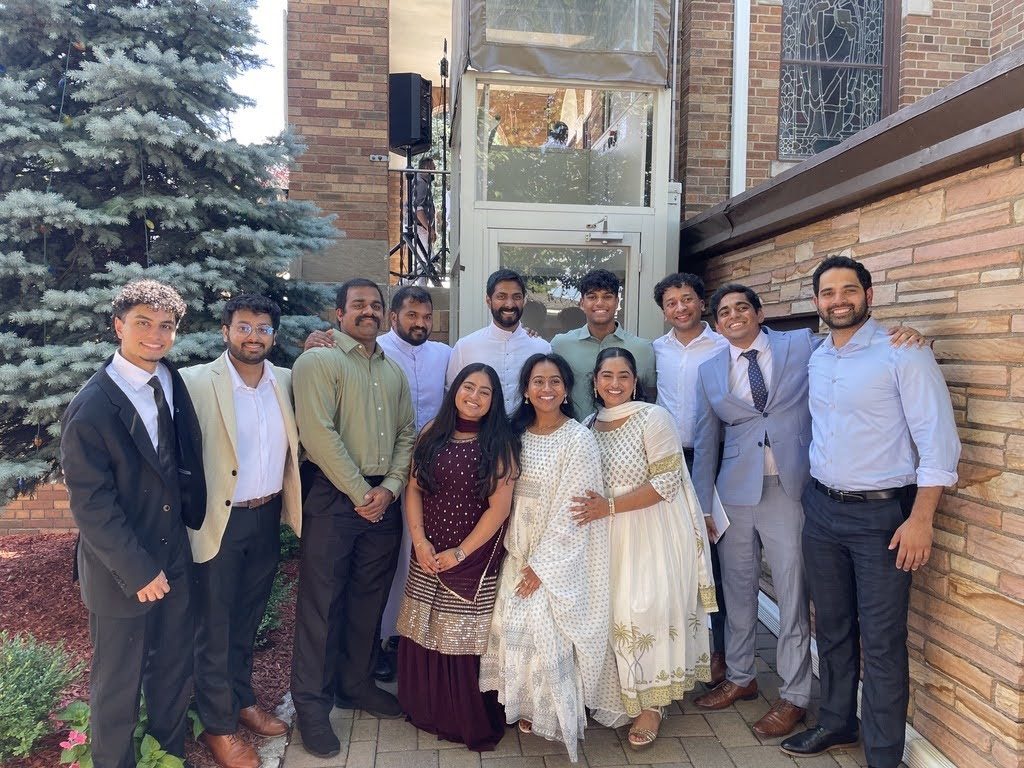
The official youth umbrella organization of the St. Thomas SyroMalabar Catholic Diocese of Chicago USA, the St. Thomas Diocese Youth Apostolate is a communion of youth groups, ministries and initiatives of our SyroMalabar parishes and missions in the United States.
Simply put, the DYA is all youth and young adults who belong to the St. Thomas SyroMalabar Diocese of Chicago who are between the ages of 14–35.
Our mission
To unite all young people of the Diocese in response to the Holy Gospel of our Lord God Jesus Christ by encouraging the formation of a deep interior life that overflows into genuine service to the SyroMalabar Church, the Universal Catholic Church and to the world.
The Youth Apostolate is led by the Bishop, the DYA Director, and teams of national and regional youth coordinators in collaboration with Parish Pastors, Mission Directors and parish/mission youth coordinators and leaders.
Don’t let anyone look down on you because you are young, but set an example for the believers in speech, in conduct, in love, in faith and in purity.
Our history
History of the Syro-Malabar Catholic Rite
The SyroMalabar Church finds her roots in the legacy of St. Thomas the Apostle and in one of the first apostolic communities in the world: the Church of St. Thomas Christians.
Read the full history
The SyroMalabar Church finds her roots in the legacy of St. Thomas the Apostle and her traditions from one of the first apostolic communities in the world: the Church of St. Thomas Christians. The Church of St Thomas Christians is an apostolic Church founded in India by St. Thomas, one of the twelve Apostles of Christ. Based on ancient, strong and continuous tradition, St. Thomas landed on the Malabar Coast in 52 A.D. After preaching and establishing Christian communities in different parts of India, he suffered martyrdom at Mylapore, India in 72 A.D.
The Church of St. Thomas Christians later came into an ecclesial relationship with the Christian communities which came to be known as the East Syrian Church. This relationship made the St. Thomas Christians share liturgical, spiritual and other ecclesiastical traditions with the East Syrian Church. At the same time, Christians of St. Thomas kept their distinctive character especially in regards to Church administration and socio-cultural and spiritual life. The sum total of this Christian life was called the Law or the Way of St. Thomas (Mar Thoma Margam).
In the 16th century, Portuguese Missionaries who reached India under explorer Vasco De Gama encountered the St. Thomas Christians. Initially the encounter was cordial, but it quickly devolved because of a failure to accept a Christian life which differed from the European tradition. The missionaries launched a program to systematically make the St. Thomas Christians conform to western Christian life. They attempted to execute this program through the decrees of the 1599 Synod of Diamper, which was unauthorized by the Holy See. Soon after Diamper event, the Church of St. Thomas Christians was brought under the Portuguese missionaries. The St. Thomas Christians were internally unprepared to accept the changes brought about by the decrees of the synod and their reaction erupted in a protest or the Bent Cross Oath of 1653 against foreign missionary rule. This resulted in the division of the St Thomas Christians.
Those who remained in full communion with the Bishop of Rome and the Catholic Church became the SyroMalabar Church. Those outside the communion with the Bishop of Rome became the Orthodox Church, which is now split between the Holy Malankara Orthodox Syrian Church and the Holy Malankara Jacobite Syrian Orthodox Church (of the Syriac Orthodox Church of Antioch). Those in the Anglican Communion became the Holy Mar Thoma Syrian Church. In the early 1900s, Malankara Orthodox Archbishop Geevarghese Mar Ivanios began a movement towards communion to the Universal Catholic Church which was perfected in September 20th 1930. This group of new Catholics who retained their full Malankara Christian liturgical and spiritual tradition became the Holy Syro-Malankara Catholic Church.
At this period, the Holy See intervened and introduced direct jurisdiction over the SyroMalabar Church. Attempts for the reunion of all the St. Thomas Christians was made, but efforts were not fruitful. Finally in the late 1890s, the Holy See granted separate SyroMalabar vicariates (quasi-dioceses): Trichur, Ernakulam and Changanacherry. By the end of 1956, the number of SyroMalabar dioceses had increased and the steady of the growth continued.
After the promulgation of the Code of Canon Law for Eastern Churches, Saint Pope John Paul II raised the SyroMalabar Church to the status of Major Archiepiscopal self-governance (other Eastern Catholic self-governance statuses by order include patriarchal, metropolitan and self-governance itself) with the title of “The SyroMalabar Catholic Major Archiepiscopal Church of Ernakulam-Angamaly.” This led Ernakulam, India Archbishop Mar Antony Padiyara to be named the first-ever Major Archbishop of the SyroMalabar Church. Since the development of the SyroMalabar Church with all the faculties and powers of her Major Archiepiscopal status, the Church today has over thirty dioceses around the world. By the grace of God, the Church is blessed with fruitful vocations of priests and religious, a vibrancy of her ancient faith, dynamic communities outside of India and a greater encounter with our Lord & our God Jesus Christ.
52 A.D.
St. Thomas arrives
The Apostle lands on the Malabar Coast and founds the Church of St. Thomas Christians.
72 A.D.
Martyrdom at Mylapore
After building Christian communities across India, St. Thomas is martyred at Mylapore.
Early centuries
The Way of St. Thomas
Ties with the East Syrian Church shape the liturgy, while the community keeps its own life — the Mar Thoma Margam.
1599
Synod of Diamper
Portuguese missionaries, through a synod not authorized by the Holy See, push the community toward Western practice.
1653
Bent Cross Oath
The St. Thomas Christians protest foreign rule, and the community divides. Those in communion with Rome become the SyroMalabar Church.
Late 1890s
First vicariates
The Holy See grants separate SyroMalabar vicariates: Trichur, Ernakulam and Changanacherry.
1930
Syro-Malankara reunion
Archbishop Geevarghese Mar Ivanios leads a group into communion with Rome, forming the Syro-Malankara Catholic Church.
Today
A global Church
Raised to Major Archiepiscopal status under St. John Paul II, the Church now has over thirty dioceses worldwide.
About our Diocese
St. Thomas Syro-Malabar Catholic Eparchy of Chicago
Established by Pope John Paul II on March 13, 2001, our eparchy serves Syro-Malabar Catholics across the entire United States from its home base in Chicago. Mar Jacob Angadiath was ordained its first bishop on July 1, 2001, and Bishop Mar Joy Alappatt became its second bishop in 2022.
Diocese Office · 310 W. Lake Street, Elmhurst, IL 60126 · (630) 279-1383
Visit stthomasdiocese.org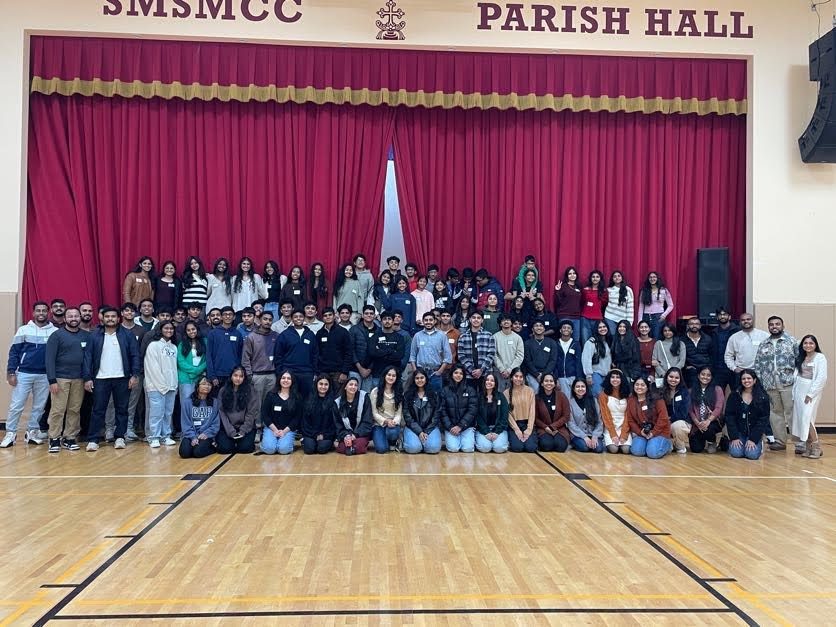
Be part of it.
Get event updates in your inbox, or reach out to your parish youth coordinator.